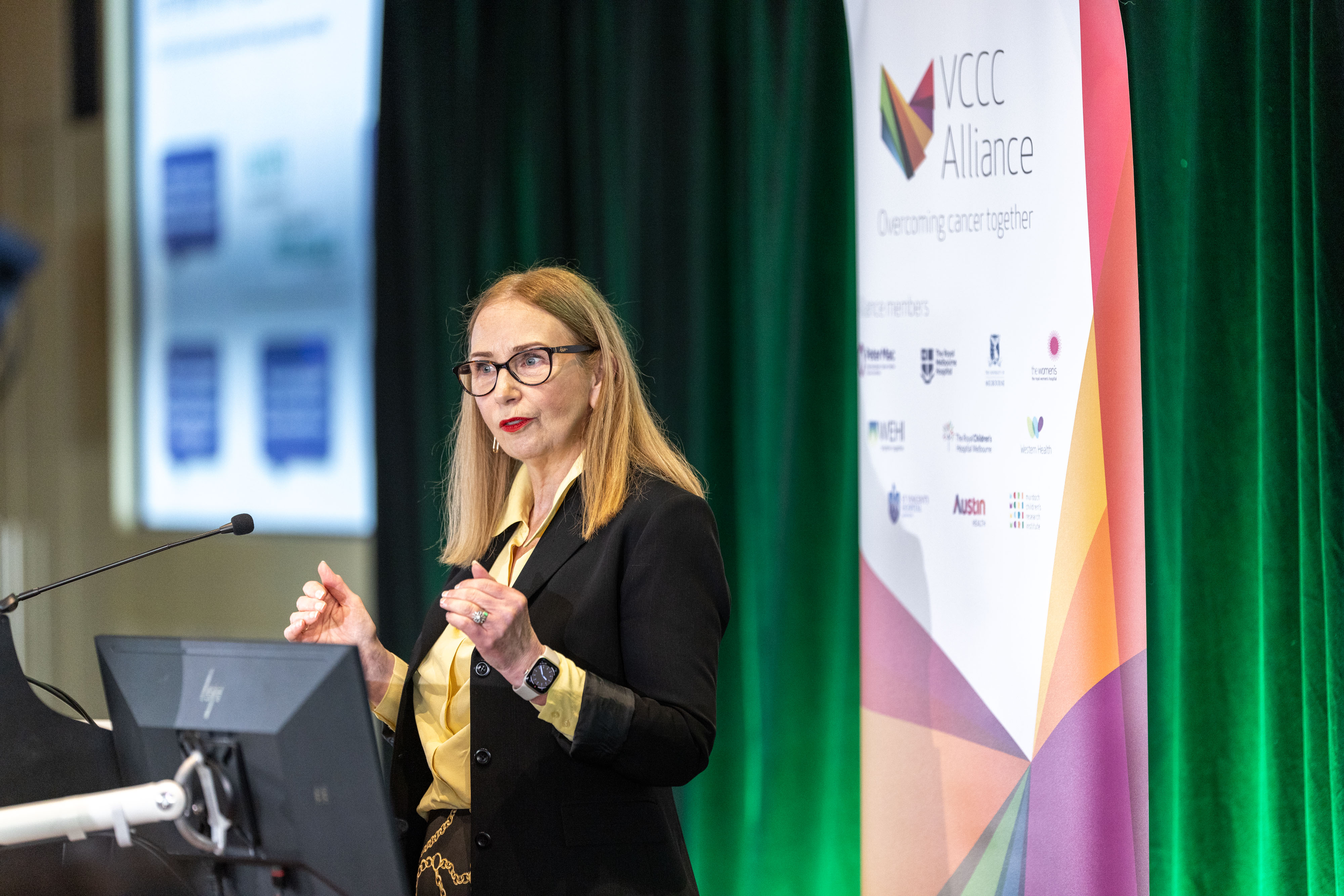









Dr Kate Moodie, Dr Stacey Rudd and A/Prof Fiona Hegi-Johnson explore the advances in targeted PET imaging for breast cancer with a focus on estrogen receptor (ER) targeted PET imaging with FES and clinical trials using novel tracers.
Many breast cancers are ER-positive, meaning they grow in response to estrogen. FES-PET imaging uses a small amount of FES or radioactive fluoroestradiol, which binds to estrogen receptors, allowing doctors to see where estrogen receptors ae active in the body — especially helpful for diagnosing, staging, and monitoring breast cancer.
Dr Moodie is a radiologist and nuclear medicine specialist with a specialty interest in breast imaging. Dr Moodie's current research pursuits are in the utility of AI in breast MRI, novel PET tracers in breast cancer and mechanisms behind the risk of increased breast density.
Dr Rudd is a senior research fellow and synthetic inorganic chemist with a particular interest in bioinorganic chemistry, radiochemistry and cell biology. Her research focus has been on the design and synthesis of metal-based pharmaceuticals, particularly radiopharmaceuticals for imaging and therapeutic applications.
A/Prof Hegi-Johnson specialises in the treatment of patients with lung and breast cancer, including a subspecialty interest in stereotactic ablative body radiotherapy (SABR). Fiona’s research program, which is supported by a Victorian Cancer Agency Fellowship, focuses on using novel PET tracers to integrate biological and imaging information into radiotherapy, and to develop personalised, biologically driven approaches to radiotherapy treatment