







Genome-wide association studies (GWAS) have identified more than 200 gene locations associated with breast cancer risk, including the estrogen receptor (ESR1).
Fine mapping has recently identified 10 potential genetic variations - candidate causal variants or CCVs - including one associated with estrogen receptor positive, estrogen receptor negative, and BRCA1-associated breast cancer.
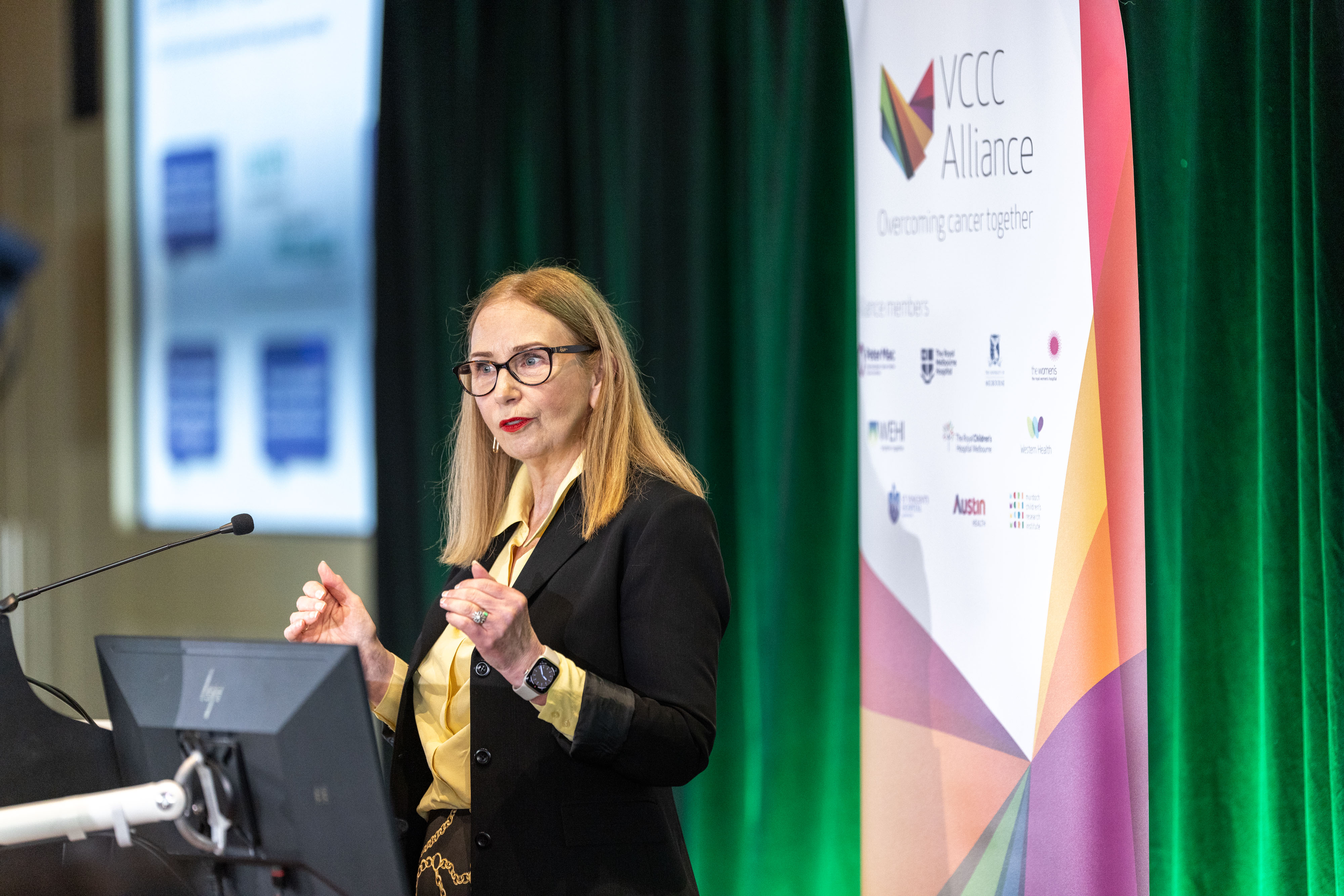
In this presentation, we will present our work testing whether Senicapoc, a KCNN4 potassium channel inhibitor, can be re-purposed for breast cancer prevention or therapy.
A/Prof Kara Britt's work has helped to define why women in today’s society have an increased incidence of breast cancer. Her lab has defined the cell types which are specifically altered under different risk conditions, and they are now working to develop novel drug targets with the long-term aim to reduce breast cancer incidence. A/Prof Britt has been supported by NHMRC, Equity Trustees, VCA, NBCF and the Basser Centre. She also co-leads the PREDICT network focused on the prevention and early detection of cancer.