







The Kathleen Cuningham Foundation Consortium for Research into Familial Aspects of Breast Cancer (kConFab) brings together geneticists, clinicians, community representatives, surgeons, genetic counsellors, psychosocial researchers, pathologists and epidemiologists from all over Australia and New Zealand who believe the causes and consequences of familial predisposition to breast cancer can be understood only by a concerted national effort at both the basic and clinical level.
In 1997, kConFab, with the help of the Family Cancer centres in Australia and New Zealand began enrolling families with a strong history of breast and breast/ovarian cancer. Genetic, epidemiological, medical and psychosocial data collected from these families by kConFab are stored in a de-identified fashion in a central relational database. Biospecimens collected from family members are used to characterise germ-line mutations in predisposing genes such as BRCA1, BRCA2, ATM, PALB2, p53, PTEN. kConFab has accumulated data on more than 1,900 multigenerational, multi-case kindreds.
kConFab itself is not a research organisation in the usual sense, but rather provides a resource upon which researchers can draw. The aims of the consortium are to make data and biospecimens widely available to researchers for use in peer-reviewed, ethically-approved funded research projects on familial aspects of breast cancer. At present, kConFab is supplying biological specimens and data to more than 180 research projects worldwide.
kConFab has played a key enabling role in:
One of the original aims of kConFab has been the focus to improve health and well-being in high-risk cancer families regardless of where they live. kConFab has been uniquely positioned to support research into new gene variant discovery for improved surveillance, early cancer detection, and personalised treatment.
Recent membership to the established The National Cancer Cohort Platform (NCCP) will provide a centralised and streamlined data access opportunity to ensure precious biospecimens and clinical data is used to its full potential by researchers nationally.
A/Prof Tsao is currently positioned at leading Melbourne hospitals, specialising in Breast and Endocrine Surgery. He holds a PhD for his research in cancer detection and is a leader in the field of using liquid biopsy to understand cancer progression and response to treatment.
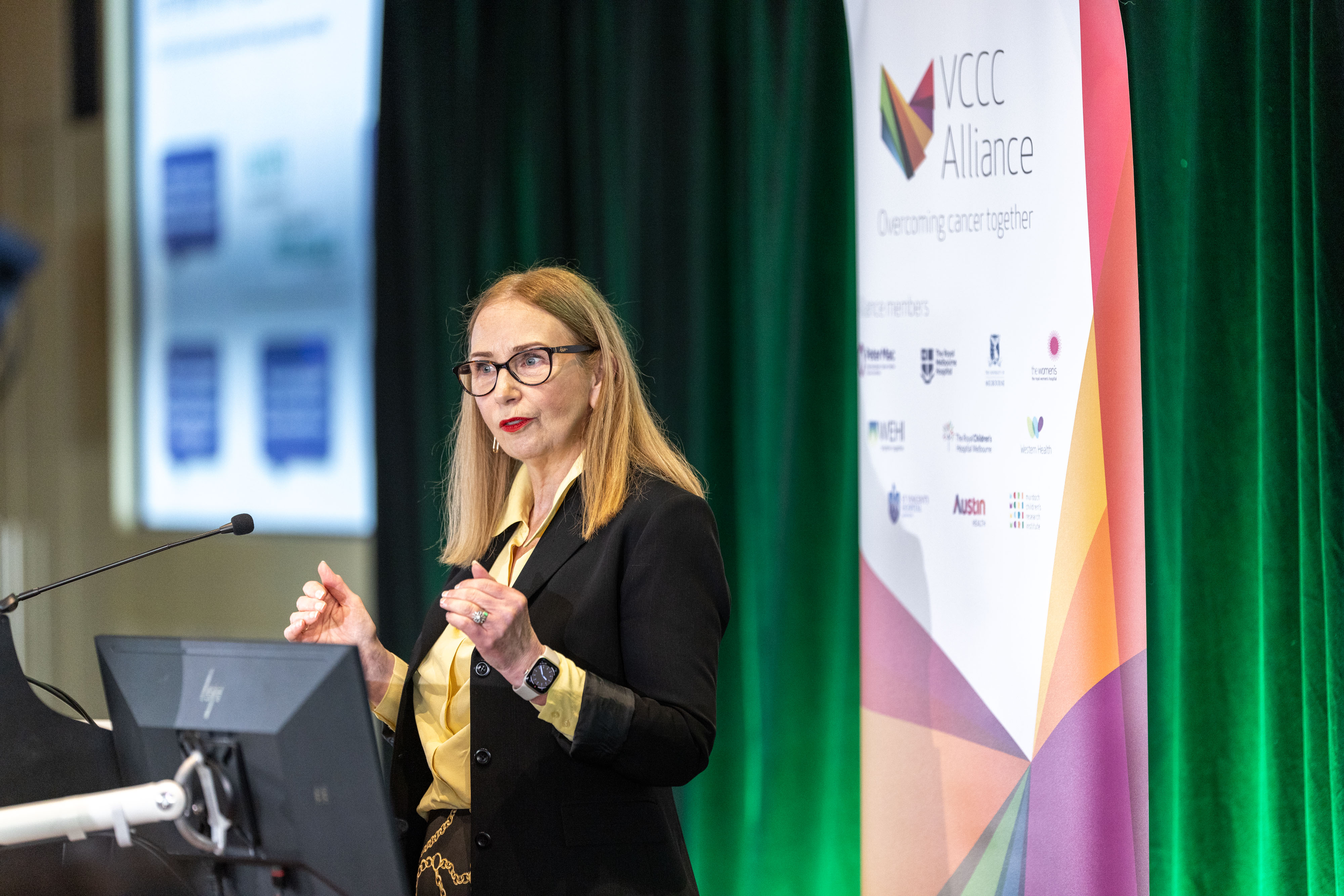
With a background in laboratory research in the molecular genetics of breast cancer at Peter MacCallum Cancer Centre, Heather was appointed in 1997 as the first national manager of kConFab. kConFab is a consortium of approximately 300 geneticists, clinicians, surgeons, genetic counsellors, psychosocial researchers, pathologists and epidemiologists from Australia and New Zealand who believe the causes and consequences of familial predisposition to breast cancer can be understood only by a concerted basic and clinical research effort. Under her management in both the centralised laboratory and administrative office, kConFab has played a major role in organising many different aspects of familial breast, ovarian and prostate cancer research in Australia and contributing this biospecimen and data resource to national researchers and major international consortia.
She has managed all aspects of the kConFab resource since its inception in 1997, that includes daily and weekly interaction with health professions and researchers with active kConFab projects. Her co-ordination and delivery of biospecimen and data has enabled 213 approved projects which has resulted in 480 high ranking kConFab publications, h-index 65, which covers the broad spectrum for the development of cancer prevention strategies and the identification of risk factors, cancer gene discovery and novel treatments for high-risk cancer families. She has a particularly interested in expanding upon a biobanks/cohort translational role by supplying directly to participants, their families and their treating clinicians in the National Family Cancer Clinics clinically significant BRCA1/2, p53, PALB2 and ATM mutation test results to assist in recruiting eligible participants to new targeted therapies based on their gene profile for either germline or somatic mutations.