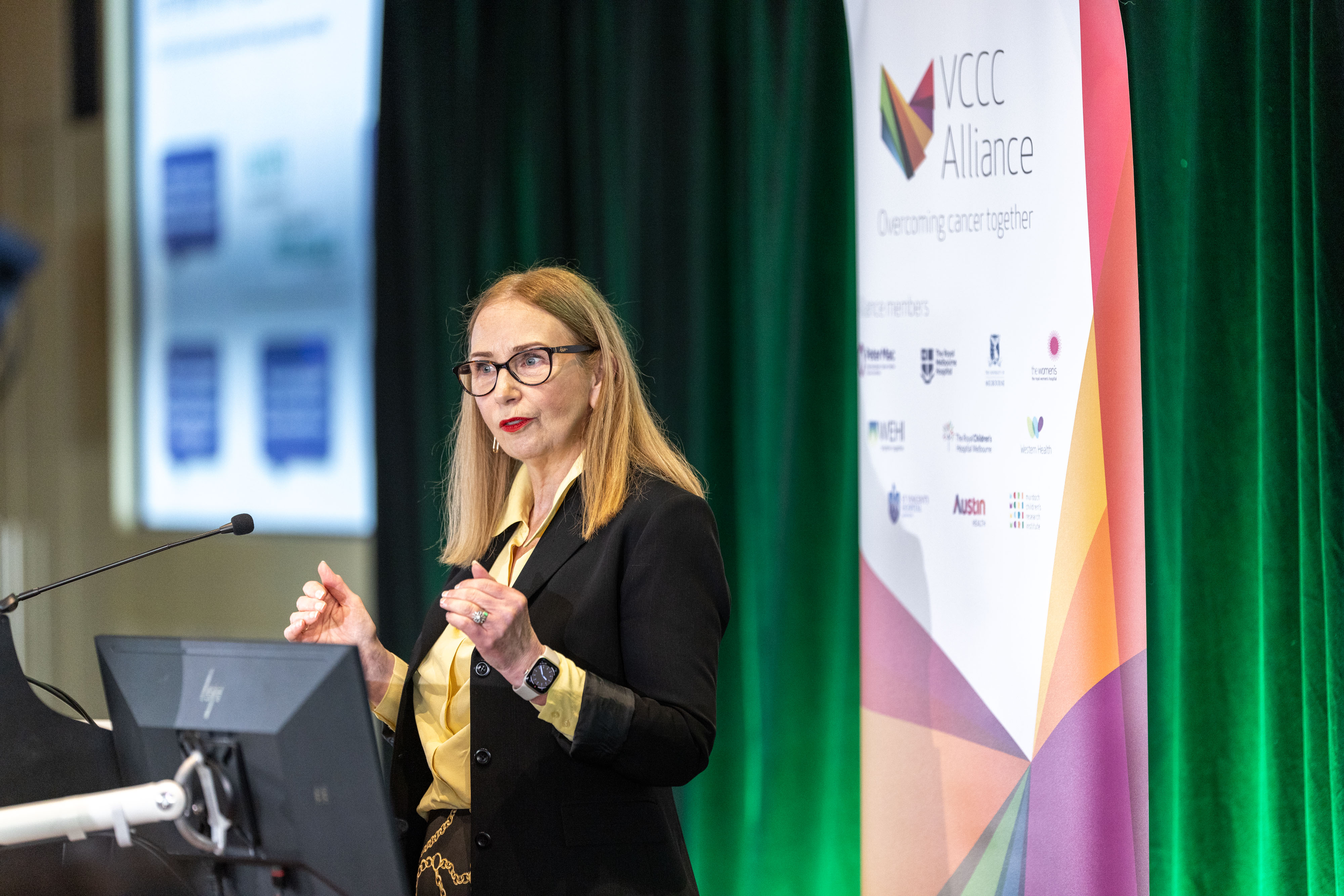






In this webinar, Prof Clare Scott will discuss ways in which the rare cancer domain can be influenced by:
The Australian Rare Cancer Portal provides a national solution, facilitating clinician real-time access to relevant clinical trials, molecular insights, and expert guidance for rare and ultra-rare cancers. Collaborative research, taking advantage of genomic opportunities and the continual emergence of innovative diagnostics and therapies, can drive change in outcomes for people with rare cancers.
Dr Kee's research in the Rare Cancer Laboratory at WEHI focuses on integrating genomics into routine cancer care and developing national platforms to improve outcomes for patients with rare and less common cancers. He has led initiatives including the NOMINATOR trial, Australia’s first national comprehensive genomic profiling study in rare cancers; and the Australian Rare Cancer Portal, which connects patients and clinicians to expert care and research opportunities. He also leads the melanoma and skin cancer tumour stream at Austin Health, consults at Peter Mac and serves as Deputy Chair of the Omico Molecular Oncology Board, helping to shape national strategies for genomic-driven cancer care.
Prof Clare Scott has clinical expertise in gynaecological cancers and coordinating care for patients with rare cancers. She has 25 years’ experience in clinical cancer genetics, working in Familial Cancer Clinics. Her laboratory focuses on making pre-clinical models in which to study drug resistance in rare gynaecological cancers. She set up the national WEHI Stafford Fox Rare Cancer Program in order to facilitate the study of many rare cancer types which are poorly researched.
Prof Scott set up the Australian Rare Cancer Portal so that expert rare cancer care and research could be streamlined for individuals, no matter where they live. In recognition of her research, she was elected to the Australian Academy of Health and Medical Sciences (AAHMS) (2018) and to the Australian Academy of Science (AAS) (2025). She believes that involving the community in research enhances the purpose of our research and magnifies the benefits of what we do.