






In 2020, the WHO released the 'Global Strategy to Accelerate the Elimination of Cervical Cancer as a Public Health Problem'. This strategy leverages the advances in prevention of cervical cancer provided by human papillomavirus (HPV) vaccination, HPV-based screening, and the impact of early diagnosis and treatment.
Its aim is for all countries to scale up vaccination, screening and treatment programs (the three ‘Pillars of elimination’) by 2030, so that every country is on track to achieve the elimination of cervical cancer as a public health problem (defined as an incidence <4 per 100,000).
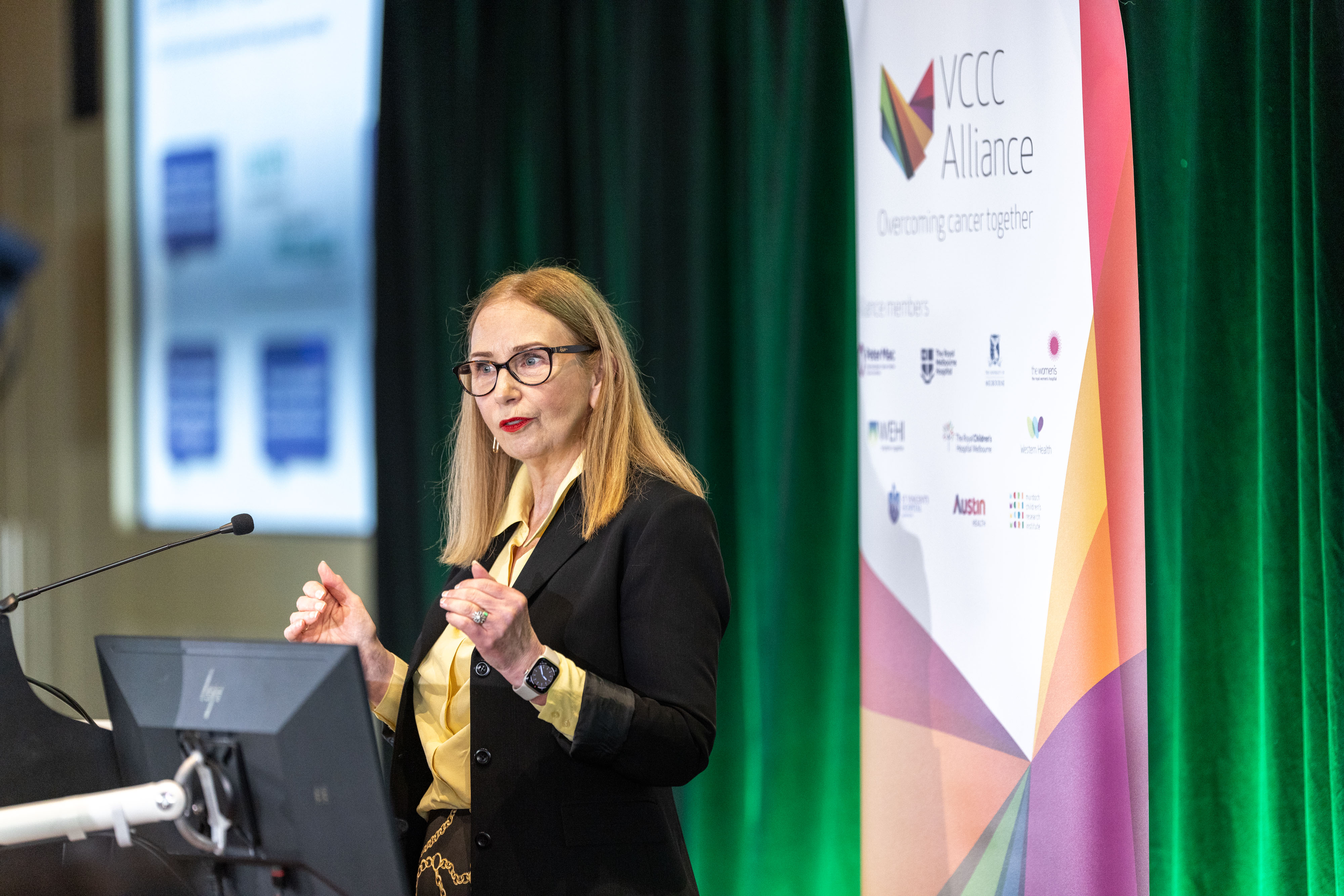
Australia released its Elimination Strategy in 2023 with a focus on achieving equity in elimination, which we expect to achieve by 2035. Prof Julia Brotherton will discuss the strategy's progress to date and how new approaches in the vaccination and screening pillars will accelerate implementation, reach and equity, in Australia and around the world. These are the single-dose schedule for HPV vaccine and vaginal self-collection for cervical screening.
A/Prof Claire Nightingale is a principal research fellow within the Evaluation and Implementation Science Unit at the Melbourne School of Population and Global Health. Claire's research interests include the evaluation and implementation of models of care that increase access and acceptability to under-served populations, including point of care testing and self-collection. Claire has over a decade of experience in global health research and practice, including working on HIV, cervical cancer, and sexual health programs while living in Myanmar, Papua New Guinea and Cambodia. Claire currently leads a program of work focused on improving equity in Australia's National Cervical Screening Program.
Prof Brotherton is a public health physician and also Professorial Fellow at the National Centre for Immunisation Research and Surveillance (Sydney).
Her current work is focused on achieving equity in the delivery and outcomes of strategies for scale up to support the WHO call to eliminate cervical cancer as a public health problem. She is chief investigator in the NHMRC Centre of Research Excellence in Cervical Cancer Control and the Centre for Research Excellence in Targeted Approaches to Improve Cancer Services for Aboriginal and Torres Strait Islander Australians.