




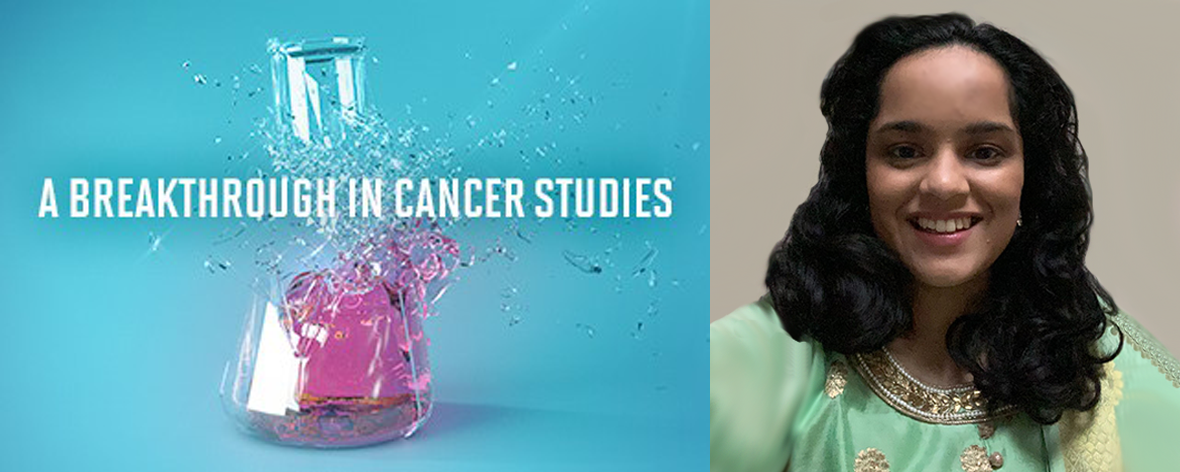
Sarika Tulpule was studying a Bachelor of Medical Sciences at Australian National University, while working part-time with Lifeblood taking blood donations, when she experienced a light bulb moment.
“My lecturer in genomics and cancer lit a spark in me that still burns bright today,” she recalls. “I decided I wanted a future in cancer research, and was determined to chase that path after graduation, even though I was already working part-time. The Master of Cancer Sciences paved the way in that direction.”
After completing her Bachelor’s degree, Sarika enrolled in the Master of Cancer Sciences online program with the University of Melbourne. It was the perfect fit, allowing her to continue her part-time work, while studying remotely from Canberra. She was keen to learn from the program’s researchers and academics at the forefront of cutting-edge research.
For Sarika, working and studying at the same time was complementary, with theory and practice fitting together like pieces of a puzzle. While pursuing the Master of Cancer Sciences, she also completed a Graduate Certificate in Epidemiology from Monash University.
An understanding of how components of blood and plasma can contribute to a cancer patient's treatment regimen inspired an interest in blood cancers for Sarika. Her Master of Cancer Sciences thesis topic was “Overall survival in acute myeloid leukaemia patients aged ≥45 years receiving combination FLT-3I therapy compared to standard of care: A scholarly review”.
The thesis investigated the most frequently detected genetic change in acute myeloid leukaemia (AML) cells, a cancer of the blood and bone marrow. This change in the FLT-3 gene is known to be associated with poor AML prognosis, especially in the older population.
Sarika’s project assessed whether giving older patients a combination regimen of chemotherapy and a targeted inhibitor (a FLT-3 inhibitor) would improve overall survival, compared to a single form of treatment. She chose to look at overall survival because it is considered the gold-standard endpoint in oncology trials. Her study found that combination therapies are a promising treatment option for the older population diagnosed with this form of AML, but more research is required to determine the benefits in a clinical setting.
Sarika acknowledges her supervisor at the University of Melbourne, Fleur Webster, and her expert advisor, Dr Joanne Davis (Postdoctoral Research Officer at ACRF Translational Research Laboratory, The Royal Melbourne Hospital), for their guidance and support throughout her capstone research project.
With just one more unit before completing her Master of Cancer Sciences, Sarika is already making strides towards her career ambitions. She recently started a new role in the Australian Government Department of Health and Aged Care as a public service graduate, supporting work around health policies and programs. She attributes the Master of Cancer Sciences with readying her for the role.
“The Master of Cancer Sciences has provided the foundation and skills needed for my goals, whether it is a career in cancer research or health policy,” she says. “It’s also a great primer for a PhD, which I hope to pursue in the near future.”
Learn more about the Master of Cancer Sciences Australia’s first cancer-specific, multidisciplinary, and wholly online program. Intakes in January, April, July and October.