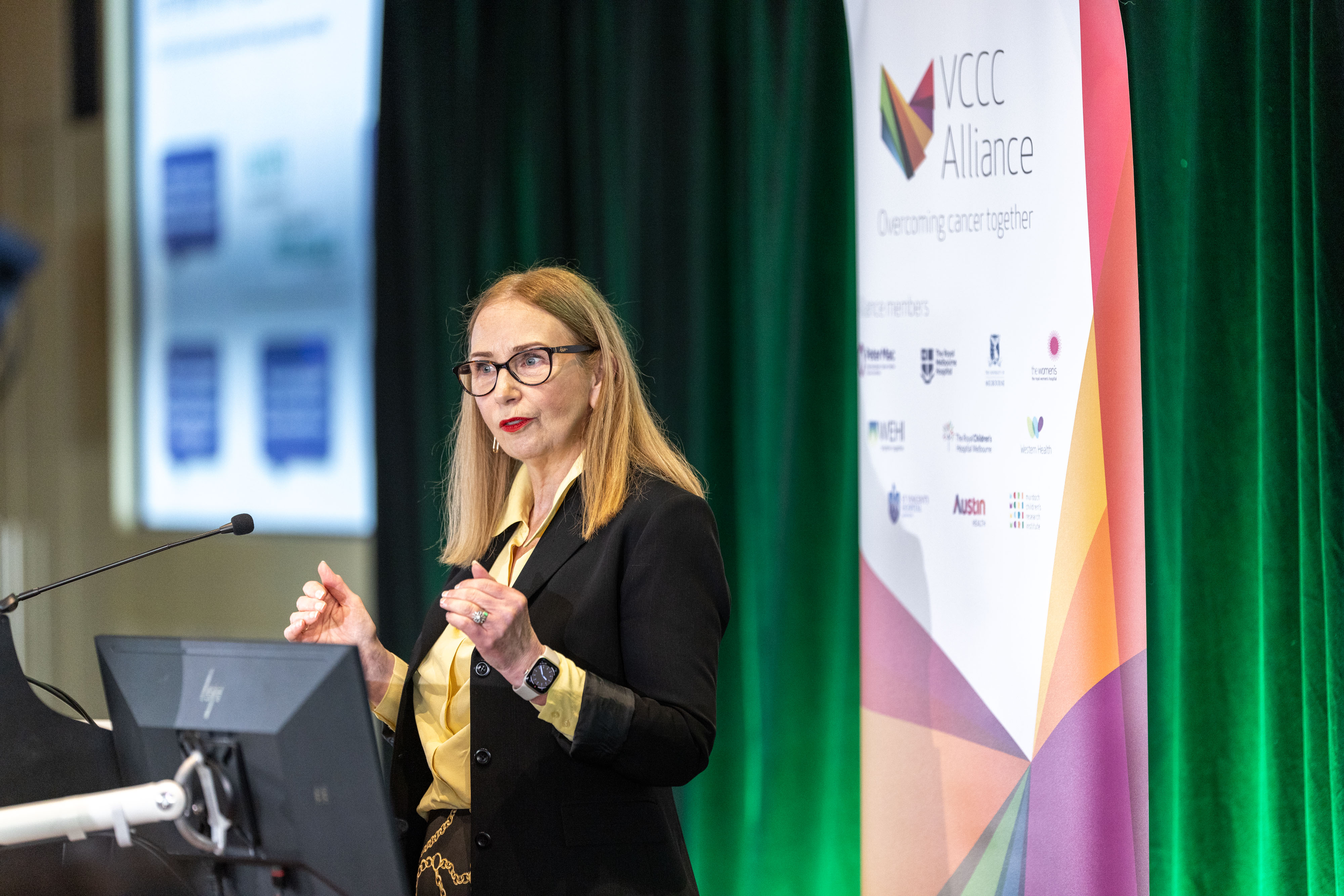
This symposium will bring together leaders in cancer care, research, policy and consumer advocacy to advance the integration of genomics into cancer care. Focused on collaboration, equity and implementation, it will review progress against the National Framework for Genomics in Cancer Control, showcase best-practice models, and identify opportunities to strengthen patient pathways and improve access to genomic services.
Through knowledge sharing and partnership building, the symposium aims to equip the cancer workforce and lived experience advocates with the confidence and skills to embed genomics in oncology practice and accelerate better outcomes for all Australians.
Share priorities identified to accelerate implementation of the Roadmap to Precision Oncology in line with the National Framework for Genomics in Cancer Control
Best-practice models showcased to strengthen coordination and patient pathways.
Barriers and opportunities identified to improve genomic access for Aboriginal and Torres Strait Islander peoples, rural, and regional communities
Stronger national partnerships established to drive continuous improvement and knowledge exchange.
After completing her medical oncology training, Dr Smith pursued a two-year fellowship at Peter MacCallum Cancer Centre and the Melbourne Genomic Health Alliance where she investigated genomic sequencing in cancer therapy. Kortyne works mainly in lung cancer and melanoma as well as focusing on her passion to improve patient equity by coordinating the Oncology in the Home program in Melbourne.
Prof Milch provides strategic clinical policy leadership to support Cancer Australia’s work to minimise the impact of cancer, address disparities, and improve the health outcomes of people affected by cancer. She is also the medical advisor on cancer screening policy at the Australian Government Department of Health, Disability and Ageing and Chair of both the Expert Advisory Committee for the new National Lung Cancer Screening Program and the Clinical Advisory Group for BreastScreen Australia. She holds professorial appointments at the Caring Futures Institute at Flinders University and the School of Medicine at University of Notre Dame, Sydney, where she teaches medical and other postgraduate students about cancer prevention, screening and early detection. Prior to joining Cancer Australia, Prof Milch was a General Practitioner and clinical researcher at the Garvan Institute of Medical Research.
Tiffany has over 30 years’ experience in molecular biology and research management, including: leading academic and diagnostic laboratories, collaborating internationally in genetic and genomic research, and consulting in genomic implementation and management. Tiffany was formerly the Managing Director of Australian Genomics, a national collaborative supporting genomic research and its translation into clinical practice.
Tiffany has served on the World Economic Forum Global Future Council for Biotechnology, the World Health Organization (WHO) Collective Global Network for Rare Disease and is a member of the WHO Technical Advisory Group on Genomics.
As the Australian Health Genomics Commissioner, Tiffany will guide the work of Genomics Australia and provide advice to Government based on broad engagement with the sector and community.
Dr Damien Kee is a medical oncologist and clinician-scientist with expertise in melanoma, rare cancers, and precision oncology. He leads the melanoma and skin cancer tumour stream at Austin Health, consults at the Peter MacCallum Cancer Centre, and serves as Deputy Chair of the Omico Molecular Oncology Board, helping to shape national strategies for genomic-driven cancer care.
Damien is a senior clinical research fellow in the Rare Cancer Laboratory at the Walter and Eliza Hall Institute, where his research focuses on integrating genomics into routine cancer care and developing national platforms to improve outcomes for patients with rare and less common cancers. He has led initiatives including the NOMINATOR trial, Australia’s first national comprehensive genomic profiling study in rare cancers; and the Australian Rare Cancer Portal, which connects patients and clinicians to expert care and research opportunities.
Dr Harris is a medical oncologist at the Bendigo Health Cancer Centre and Clinical Lead for the Oncology Trials Unit. His specialty areas are in breast cancer, melanoma, lung cancer and general oncology. He graduated from Adelaide University Medical School and has extensive postgraduate general medical, oncological and palliative care experience. In 2013, he completed medical oncology advanced training at Bendigo Health, Peter MacCallum Cancer Centre and the Austin Repatriation Hospital. His final year was a clinical trials fellowship in breast cancer, gastro-intestinal tumours and genitourinary cancers. Between 2014 and 2016, Dr Harris undertook a fellowship at the Royal Marsden Hospital in London, United Kingdom, working initially in the Sarcoma Unit and subsequently with Professor Johann De Bono in the Drug Development Unit (phase 1 trials) and the prostate team.