




Surgical menopause, the removal of both ovaries prior to natural menopause, may impact short-and long-term physical and emotional health. An increasingly common cause of surgical menopause is risk-reducing salpingo-oophorectomy (RRSO) in those at high inherited risk of ovarian cancer.
The WHAM (What Happens After Menopause?) study is the largest prospective controlled study of RRSO. It measured the effect of RRSO compared to controls on physical and mental health over two years, and the potential modifying effects of menopausal hormone therapy (MHT).
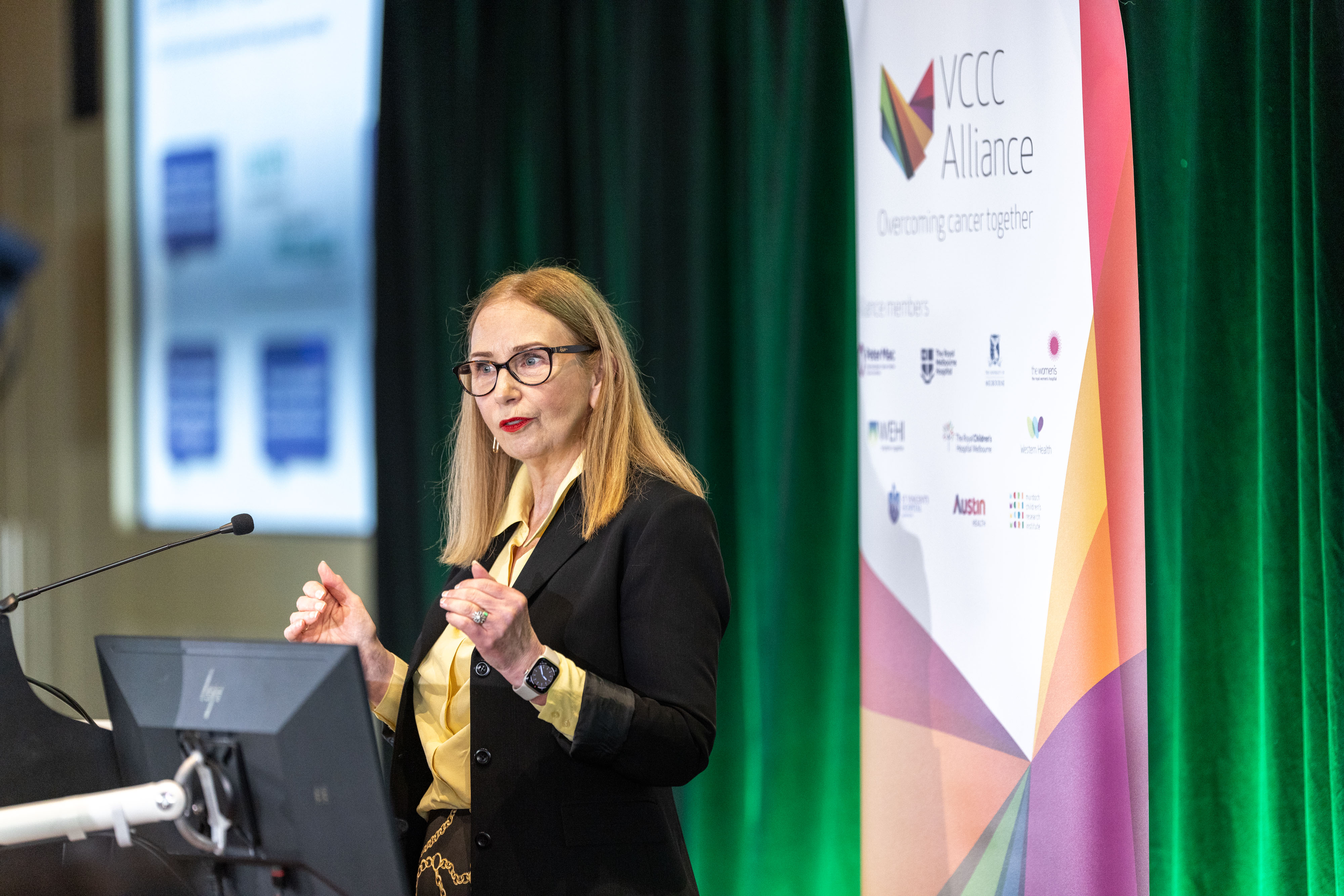
In this Breast Cancer Grand Round, Prof Martha Hickey will outline the key findings from the WHAM (What Happens After Menopause?) study objectives and translating those results into practical clinical implications for the care of women going through surgical menopause.
Prof Hickey leads Australia’s largest menopause service, focusing on cancer patients. In her clinical practice, she led the COMMA (Core Outcomes in Menopause) global initiative to standardise reporting in clinical trials of menopause treatments.
With her WHAM (What Happens after Menopause?) cohort, she is leading a Wellcome LEAP funded program on cognition and a Global Research Challenge on CVD after surgical menopause. She has a strong commitment to evidence-based medicine and is an Editor for the Cochrane Collaboration and Lancet Obstetrics, Gynaecology and Women’s Health.
Together with University College London, she led a Priority Setting Partnership in Menopause across 51 countries that is defining a new research agenda in this field. She also contributed to the WHO ‘modifiable factors in dementia’ program.
Professor Hickey also led the first Lancet series on Menopause, published in 2024 and was ‘topic expert’ for the 2024 NICE guidelines on menopause. She works closely with artists to challenge negative messaging about ageing in women. This has included the Flesh after Fifty exhibition, featured in the Lancet Menopause series.