





The Master of Cancer Sciences program has been honoured internationally for transforming lives and addressing a critical shortage of cancer specialists across the Pacific region.
Developed by the Cancer Science Unit (CSU), a partnership between the VCCC Alliance and the University of Melbourne, the program will receive the prestigious 2026 Social Accountability ASPIRE Award at the Association for Medical Education in Europe (AMEE) Conference in Vienna next month.
The ASPIRE award underscores the Master of Cancer Sciences' profound impact on global health equity. The program has already made a tangible difference, with Dr Andrew Soma becoming the first and only oncologist in the Solomon Islands, after completing the degree while working full-time at the National Referral Hospital in Honiara, which serves 700,000 people.

Dr Andrew Soma, Solomon Islands
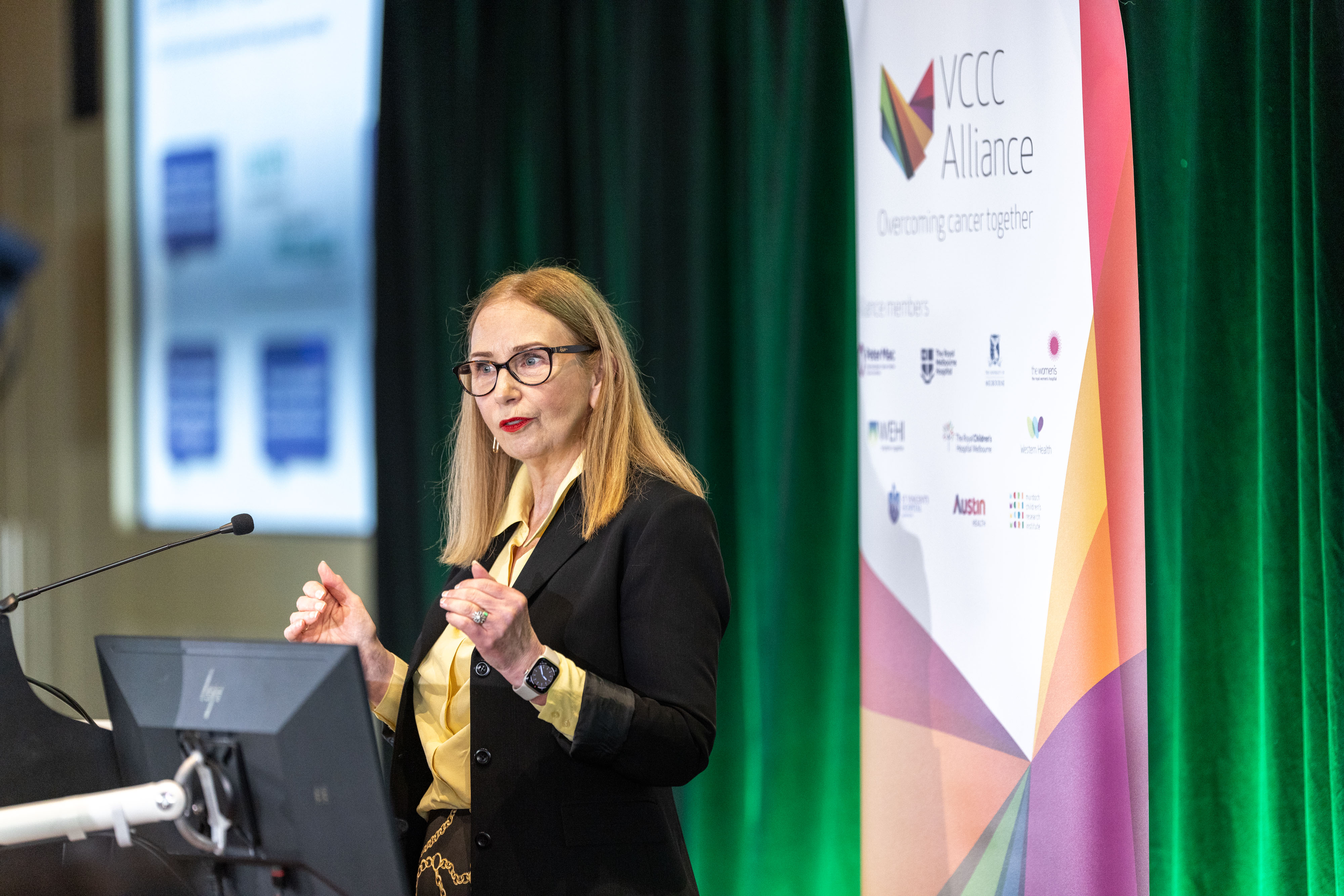
Professor David Ashley, CEO of the VCCC Alliance, said Dr Soma's success demonstrated what's possible when geographical barriers to education are removed.
"This program isn't just about training individuals, it's about transforming cancer care for entire communities," he said. "Every clinician we train stays in their region, directly strengthening health systems where they're needed most. The Pacific Islands face a critical shortage of cancer specialists. This award recognises that education delivered flexibly and locally can save lives."
"We're proud to support clinicians like Dr Soma who are committed to their communities. Their dedication inspires us to keep breaking down the barriers that prevent talented healthcare workers from accessing world-class training."
The fully online Master's degree is designed to train cancer specialists without requiring clinicians to leave their home countries. It's open to doctors, nurses, pharmacists and other healthcare workers across the Pacific and beyond.
Since launching in 2019, 135 students have completed the program, many of whom have stayed in their communities to strengthen local cancer services.
"When Pacific Island clinicians move abroad to study, many never return home," said Dr Soma. "Being able to study entirely remotely while working is a game-changer for building cancer expertise where it's needed most."
Medical educator and radiation oncologist Associate Professor David Kok, Head of the University of Melbourne's Cancer Science Unit, said: "This degree allows clinicians to acquire advanced oncology knowledge while remaining in their workplaces and communities, directly strengthening local health systems. This is particularly important for Pacific Island developing nations, where there's a huge disparity of care due to a lack of pre-existing specialist oncology infrastructure."
Emeritus Professor Robert Goddard Fuller, Chair of the ASPIRE Board, said the CSU's program was particularly important in the Australian and wider Asia-Pacific context, where geography, workforce shortages, health system variation, and limited specialist oncology infrastructure contribute to inequitable cancer outcomes.
"The reviewers particularly valued the programme's commitment to Pacific oncology workforce development and its explicit intention to reduce the risk of workforce migration or 'brain drain'," he said.
"The contribution to the training of the first oncologist in the Solomon Islands and the development of an oncology training pathway for Pacific Island clinicians were viewed as clear examples of socially accountable action with regional significance."