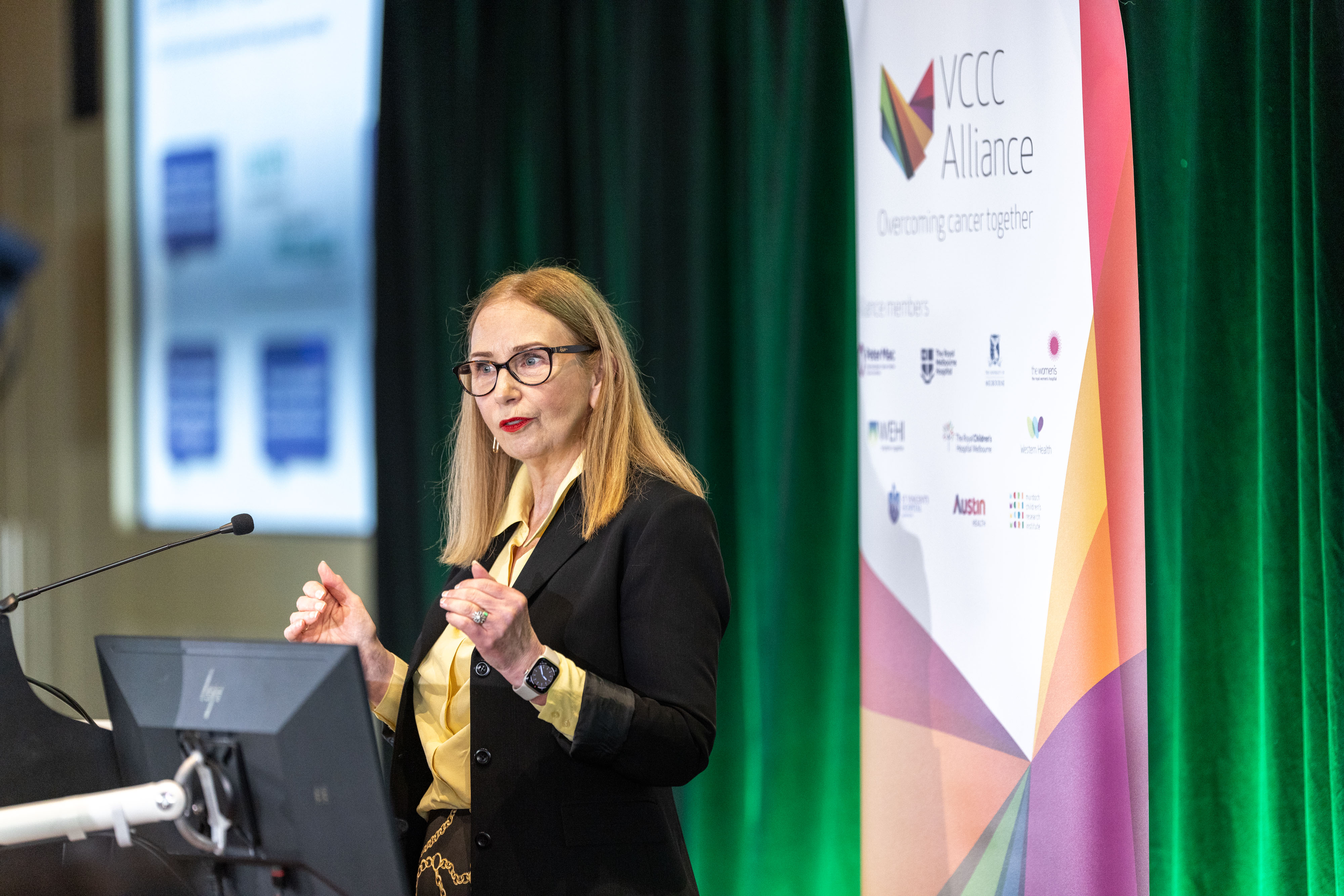


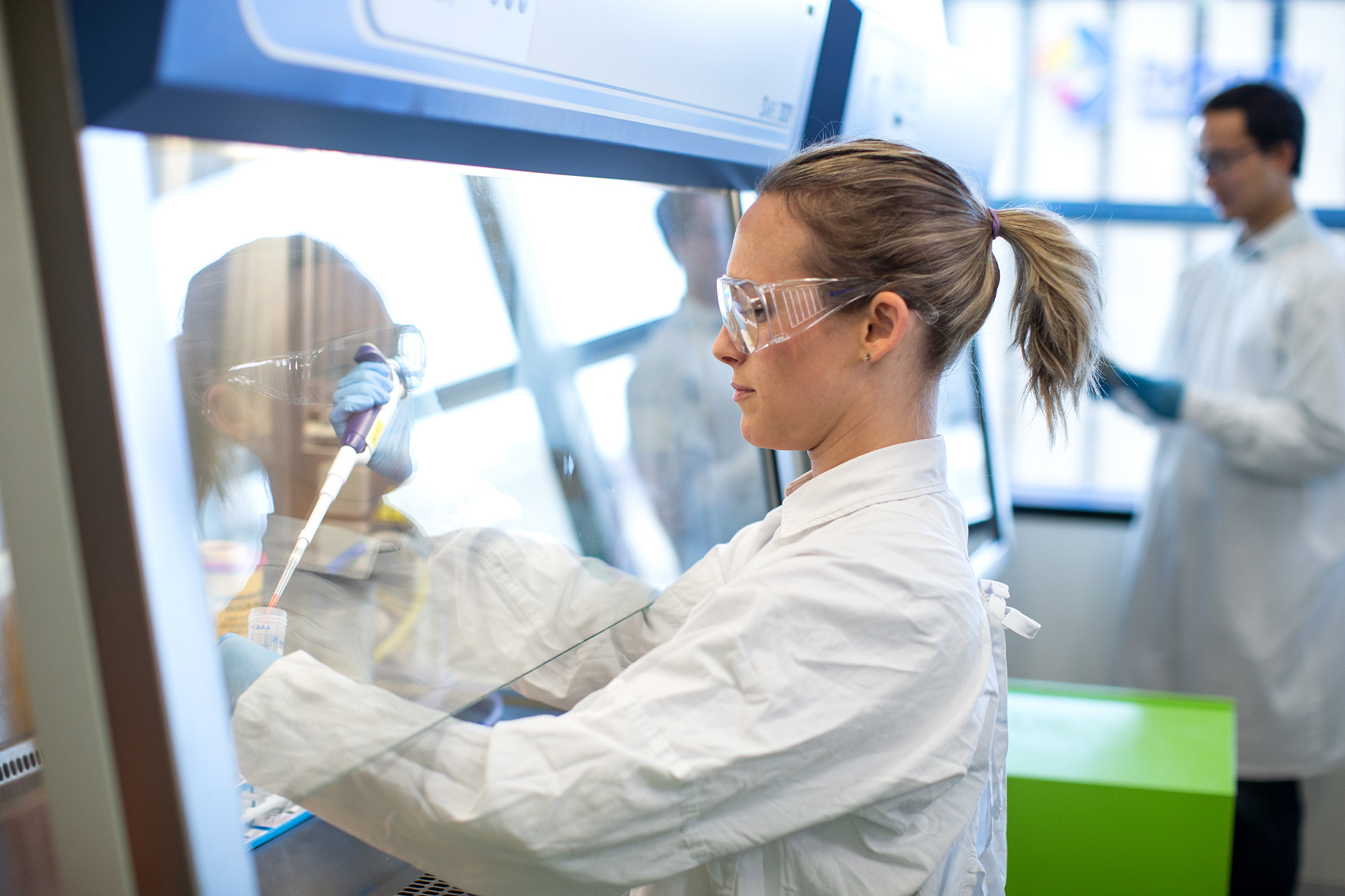

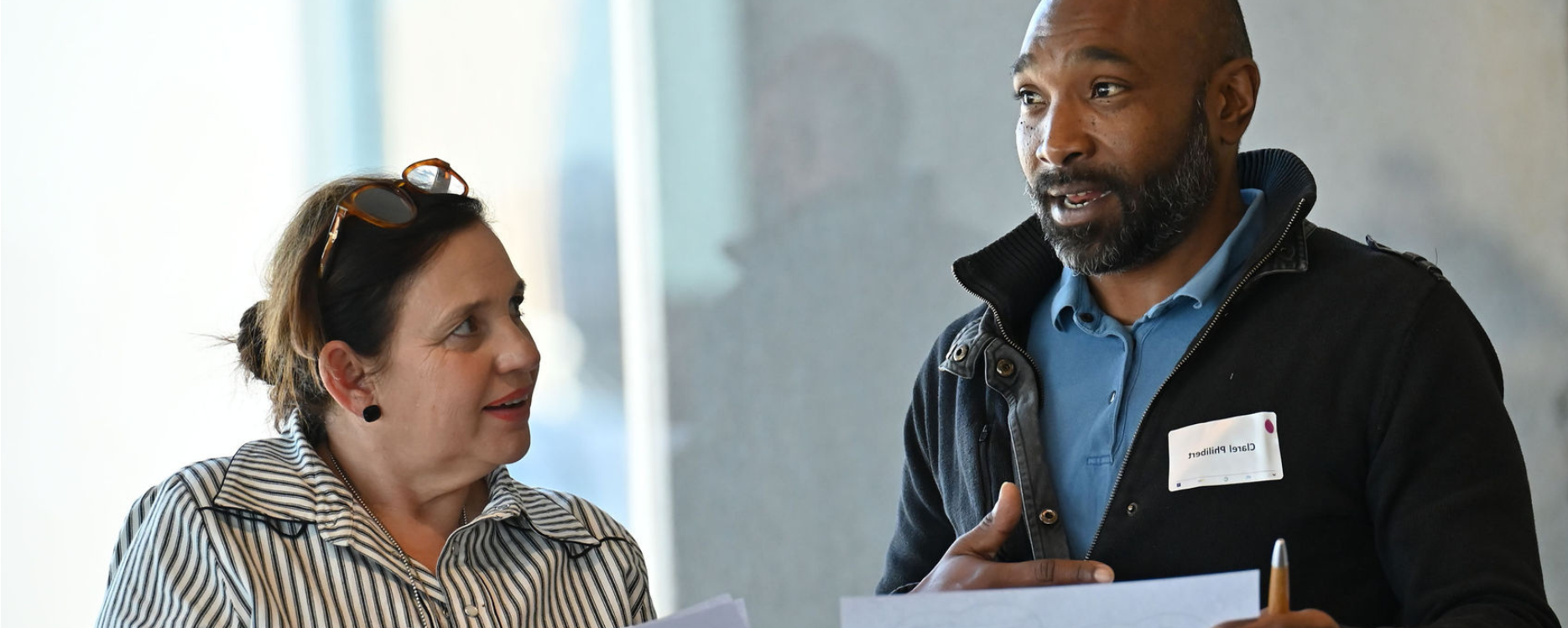



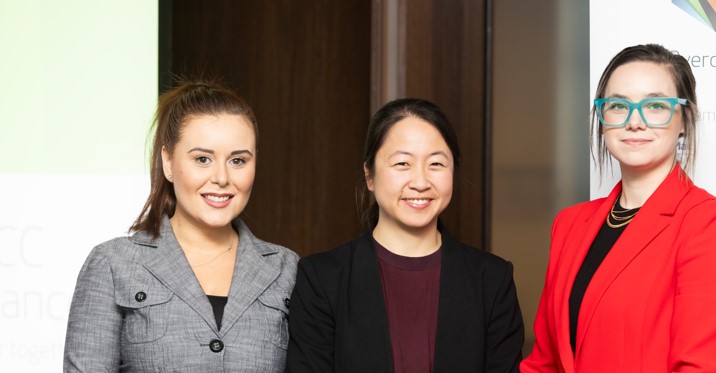
Three Melbourne emerging cancer researchers awarded $10,000 to support their careers have described their winning PhD projects and outlined their plans for the funding, generously provided by the Picchi Brothers Foundation.
Now in its 12th year, the 2024 VCCC Alliance Picchi Awards were officially awarded to the recipients at a ceremony on Monday 7 October at the VCCC building.
PhD studies analysing cervical screening self-collection, immunotherapy in colorectal cancer and technology to help cancer patients manage side-effects of treatment, were this year’s winning entries.
Picchi Brothers Foundation Board member and medical oncologist Professor Mark Rosenthal said the Picchi Awards were his favourite day of his professional year, and the winners from across VCCC Alliance members represented ‘the best of the best’ in early-career cancer research.
He said the Picchi Brothers Foundation motto when it comes to funding research is 'We don’t offer a cure. We help look for one'.
“This sort of event, this sort of funding, really makes a difference,” he told the awards ceremony, which was also attended by the Picchi Brothers Foundation Executive Officer, Lyn Parkin, Treasurer Adrian Trubiani, family and board member Melanie Pierini and Board Chair Joseph Lukaitis AM.
Population Health
Nicola Creagh, Melbourne School of Population and Global Health, Centre for Health Policy, University of Melbourne
Evaluating the implementation of a universally available choice for self-collection cervical screening in Australia: the solution to improving equity?Clinical Science
Dr Julia Lai-Kwon
Peter MacCallum Cancer Centre; Sir Peter MacCallum Department of Oncology, University of Melbourne
Co-design of an electronic patient-reported outcome symptom monitoring system for people receiving immunotherapyBasic Science
Marina Yakou
Olivia Newton-John Cancer Research Institute, School of Cancer Medicine, La Trobe University
Tissue-dependent dichotomy in IL-15 mediated anti-tumour immunity to colorectal cancer
Nicola Creagh from the Melbourne School of Population and Global Health, Centre for Health Policy, University of Melbourne highlighted ongoing inequities in cervical cancer and described her research evaluating the implementation of universal access to cervical screening self-collection. Nicola will use her award funding to visit the Implementation Science Center for Cancer Control, at Washington University, St Louis, Missouri.
Dr Julia Lai-Kwon, from the Peter MacCallum Cancer Centre; Sir Peter MacCallum Department of Oncology, University of Melbourne introduced an innovative technology for cancer patients to self report immunotherapy side effects in between hospital visits. The technology was built in Epic, the Parkville Electronic Medical Record, with software called eSYM – electronic system management. She hopes the electronic patient-reported outcome (ePRO) symptom monitoring that she developed as a proof of concept, will be able to be disseminated interstate after useability testing. Dr Lai-Kwon will use the funding to attend meetings and conferences in Rotterdam, Manchester and Seattle in 2025.
Marina Yakou from the Olivia Newton-John Cancer Research Institute, School of Cancer Medicine, La Trobe University, drove home the message that the location of cancer is crucial when determining treatment. Her basic science research into colorectal cancer highlighted that immunotherapy is not a one size fits all approach, especially when it comes to cancer cells in the colon – the organ with the largest number of microbes. Marina’s work investigated the anti-tumour properties of gamma delta t-cells, their interaction with messenger cytokines, and whether this could be harnessed to attack tumours in the colon. Marina will travel to the US to the MD Anderson Cancer Center to meet Dr Katy Rezvani to seek to further her research in this area, and to a conference in Canada, in 2025.