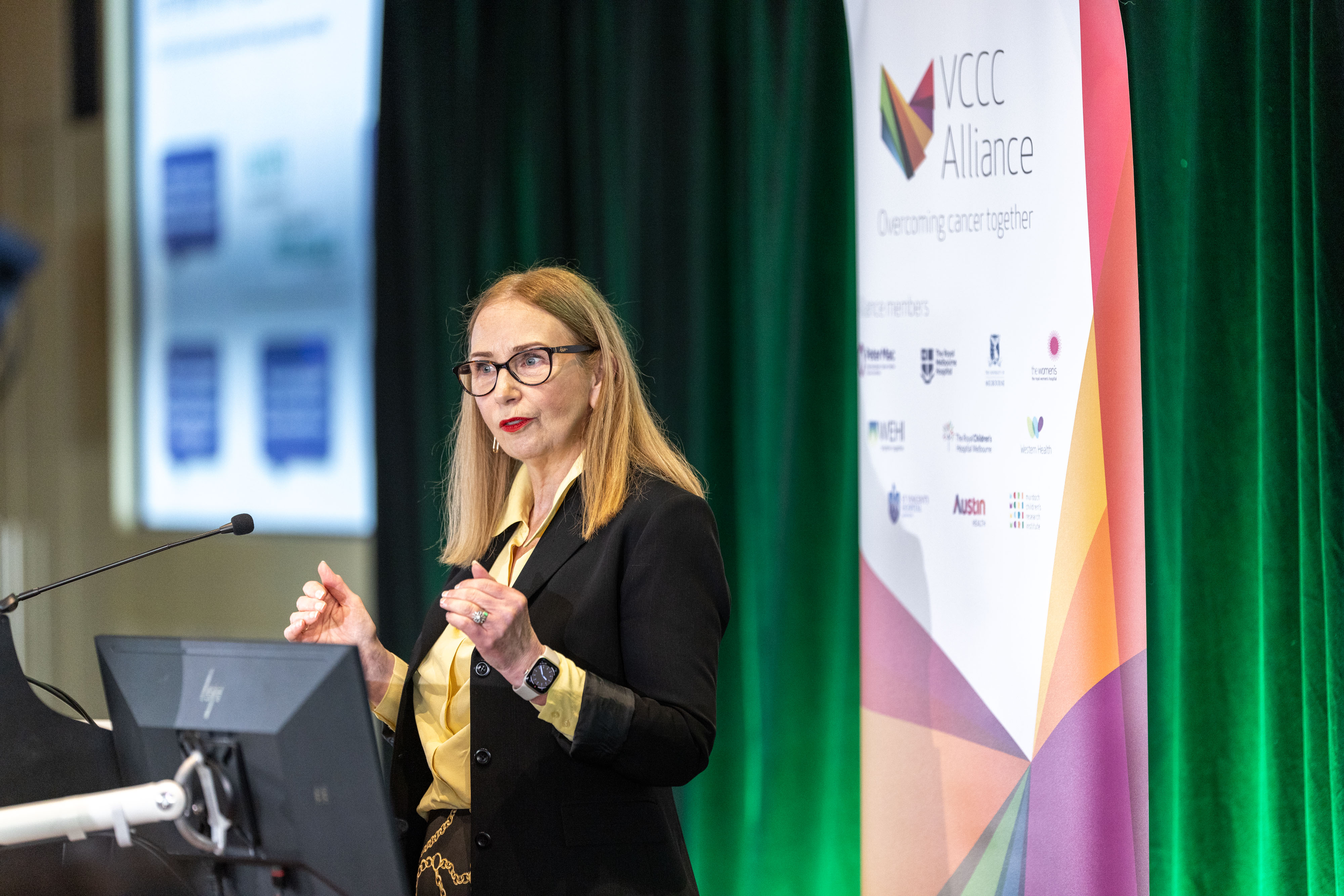





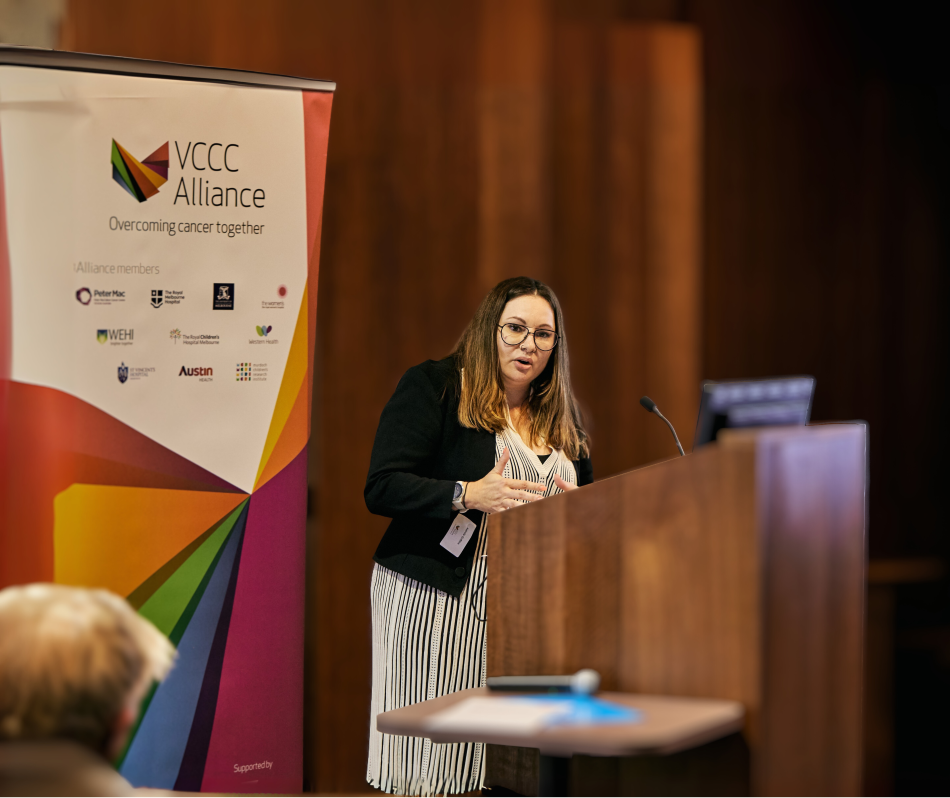
We're grateful to A/Prof Kalinda Griffiths, inaugural VCCC Alliance Aboriginal and Torres Strait Islander Health Research and Education Lead, for allowing us to publish her speech delivered at the Clinical Translational Network 10 year anniversary event.
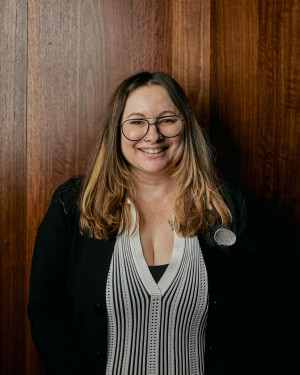
Associate Professor Kalinda Griffiths
Good evening everyone.
I begin by acknowledging the Traditional Custodians of the land on which we are meeting on, and paying my respects to Elders past, present and future. I also acknowledge any Aboriginal and Torres Strait Islander people here today.
As we celebrate 10 years of the VCCC Alliance Strategic Research and Education Program, it is important to remember that this work takes place on unceeded Aboriginal land, and that the story of equity in cancer care must include the story of Aboriginal and Torres Strait Islander peoples.
I want to take up a little space here and will tell this story as my own. As an Aboriginal woman, a Yawuru woman impacted by cancer and working in the sector.
The VCCC Alliance was created to accelerate discovery, collaboration, and innovation in cancer research and care. Today, it has become a network where clinicians, researchers, educators, and communities come together to deliver world-leading outcomes.
Working together to support people and families impacted by cancer.
But what has always set the Alliance apart is its recognition that science alone is not enough. For impact to be real, research and education must reach people equitably – no matter where they live, who they are, or what community they belong to.
I had the privilege of serving as the Research and Education Lead for Aboriginal Health within the 2021-2024 Strategic Program Plan.
This role gave Aboriginal health a dedicated place within the Alliance’s leadership structure – a signal that equity was not an afterthought, but a strategic priority.
In this role, I worked to ensure that Aboriginal and Torres Strait Islander peoples were not just represented in conversations about cancer research and care, but that the priorities that we had been arguing for across systems over the past 25 years of Indigenous cancer research were shaping the very direction of the translational work being undertaken.
Alongside this, I also served as Chair of the Equity Advisory Group, supported by an excellent team, and excellent leadership, where we worked collectively to ensure equity was embedded across tumour streams, cross-cutting themes, and education initiatives.
Together, these efforts helped drive several important shifts:
Aboriginal voices, and formal partnerships to work together with the community controlled sector as well as the culturally and linguistically diverse sector a core component of program design, to support initiatives and implementation that will work for the communities that we serve. We have undertaken research into understanding cultural safety within hospitals across the state, and program work such as lung cancer screening with the Victorian Aboriginal Community Controlled Health Organisation. We were also invited to host the World Indigenous Cancer Conference in 2024 and our efforts continue to support the conference in 2026 in Aotearoa/New Zealand.
We have worked to understand what is required for the Victorian system to achieve equity and developed a Cancer Equity Framework to guide education, build capacity for clinicians to deliver care that respects language, culture and communities. Acting as an exemplar for other comprehensive cancer centres recognising that innovation is a learning journey. This means being adaptive and being able to transform with on the ground needs.
And importantly, we have been able to build some momentum in data initiatives that highlight the requirement for quality, relevant data that can provide the evidence needed to hold ourselves accountable, and to identify the needs of communities. Something that the VCCC Alliance identified as a priority at the very start of the program.
Each of these represents a step toward closing the cancer gap for Aboriginal and Torres Strait Islander people, and toward building a system that works for all.
As we celebrate 10 years of achievement, we must also ask: what do the next 10, 15, 20 years demand of us?
The challenge is clear: to ensure that the future of diagnostics, surgery, precision oncology, genomics, digital health, and survivorship is also a future of equity.
For Aboriginal and Torres Strait Islander peoples, that means:
The VCCC Alliance has shown what is possible when collaboration is driven by purpose. But collaboration without equity is incomplete.
My time as Research and Education Lead for Aboriginal Health, and as Chair of the Equity Advisory Group, showed me that when equity is at the centre – we don’t just make better science, we make fairer systems.
Equity is not the end point, it is the measure of our progress. If in the next 20 years every Aboriginal and Torres Strait Islander person has the same chance to survive cancer as anyone else, then the Alliance will have truly done its job.
Thank you