






This is despite many major cancers being largely preventable.
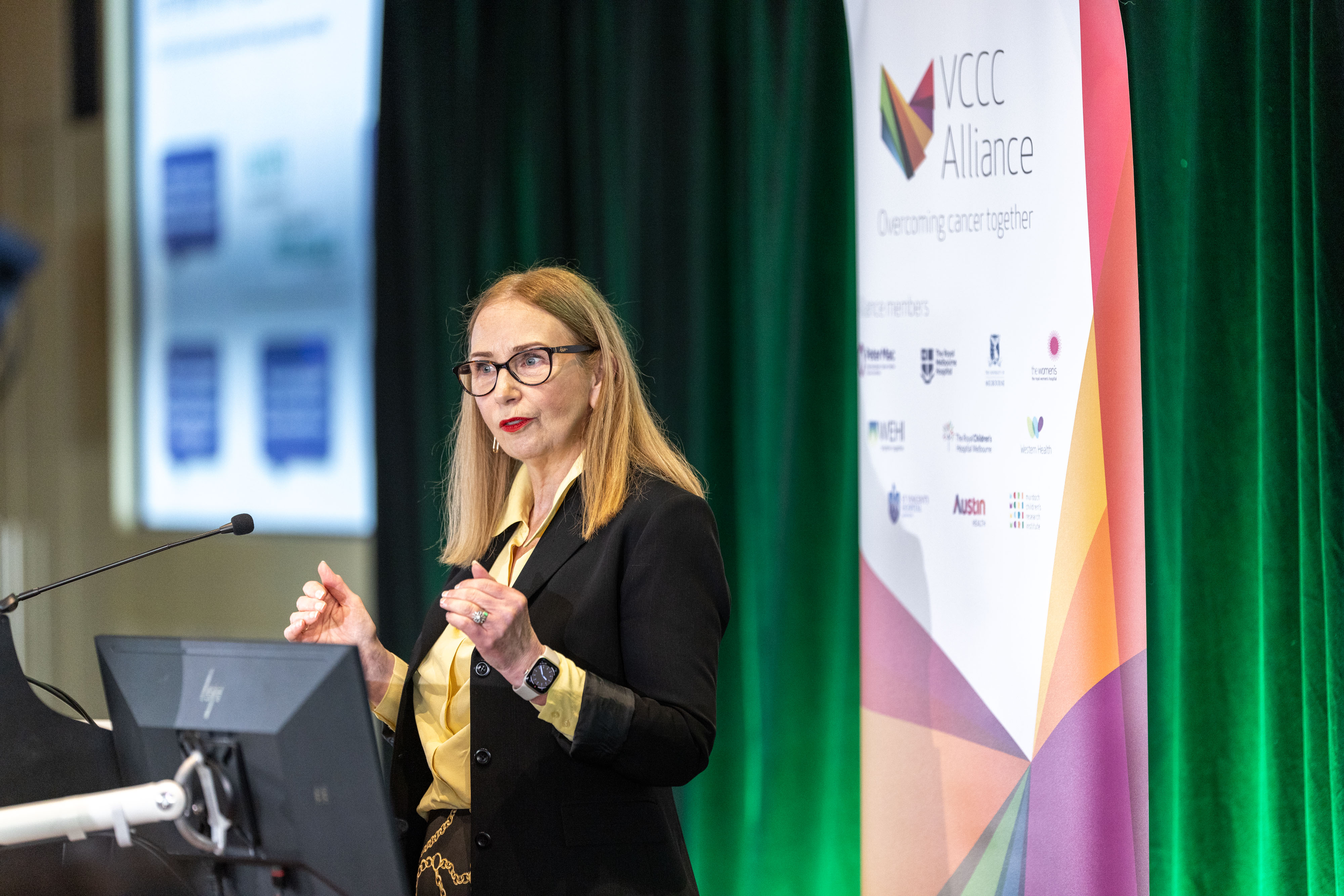
Dr Elisabete Weiderpass, the Director of the International Agency for Cancer Research (IARC) shared the research outcomes at the VCCC Alliance Monday Lunch Live event on Monday November 17. The event was co-hosted by Peter MacCallum Cancer Centre and Cancer Australia, held at the Victorian Comprehensive Cancer Centre.
Dr Weiderpass is in Melbourne as a key speaker at the Union for International Cancer Control’s World Cancer Leader’s Summit.
IARC, the independent cancer research institute of the World Health Organization, conducts its own global research to inform WHO policies.
Research by IARC on the global cancer burden, benchmarked from 2022, projects cancer incidence globally will increase from 20 million new cases to 35 million by 2050, a 77 per cent increase. The research also found cancer deaths would likely rise from 10 million to 18.5 million, an 85 per cent increase.
The greatest proportion of these would be experienced in low and middle income countries, which are least prepared to face the increasing burden of cancer, Dr Weiderpass said.
In Australia, new cancer cases are projected to increase from 212,000 in 2022 to almost 340,000 in 2050, while cancer deaths are predicted to rise from 52,000 a year to almost 100,000 – a 90 per cent increase.
“This is one of the major challenges…that governments around the world are facing with this massive increase in cancer cases,” Dr Weiderpass said.
Lung cancer continues to be the most diagnosed cancer globally resulting in the most deaths from cancer, Dr Weiderpass said.
Dr Weiderpass said IARC research had highlighted the role of alcohol in contributing to cancer. More than 740,000 new cancer cases globally were attributed to alcohol consumption in 2020, and even light to moderate drinking was associated with about 100,000 cases. Three-quarters of those affected by cancer from alcohol consumption were men.
According to 2018 figures, about 20 per cent of all cancer cases – 2.2 million – were attributable to infections such as Human Papilloma Virus (HPV), Hepatitis B, Hepatitis C, and H. pylori which is associated with gastric cancer. Cervical cancer caused by HPV is a completely preventable cancer thanks to a vaccine, developed in Australia.
Many cancers are preventable, Dr Weiderpass said, citing IARC research based on 2022 data that shows 1.6 million cancers could be prevented in Europe if countries implemented prevention policies.
The data shows cancer of the cervix and uterus was 100 per cent preventable – due to the vaccine – as was Kaposi sarcoma. Other highly preventable cancers include anal (91%), larynx (92%), lung (86%), oral and pharynx (86%), melanoma and skin (84%), oesophagus (78%) stomach (75%) and liver (73%).
Further research showed 1.2 million lung cancer deaths could be prevented globally by 2095 if tobacco sales were banned to younger generations.
Dr Weiderpass said it was likely the next worldwide strategy to prevent cancer would be focused on stomach cancer.
Watch the recording of this live webinar on the Centre for Cancer Education