




Cancer surgeon A/Prof Gavin Wright is enthusiastic about the start of Australia’s National Lung Cancer Screening Program. But he’s also cautious – the potential increase in workload for healthcare workers is uncertain and its impact unclear.
This is what the VCCC Alliance’s upcoming Lung Cancer Screening Symposium on May 23 is designed to tackle. The event is one spoke in a much broader wheel involving multiple organisations, readying Victoria’s healthcare workforce for the change.
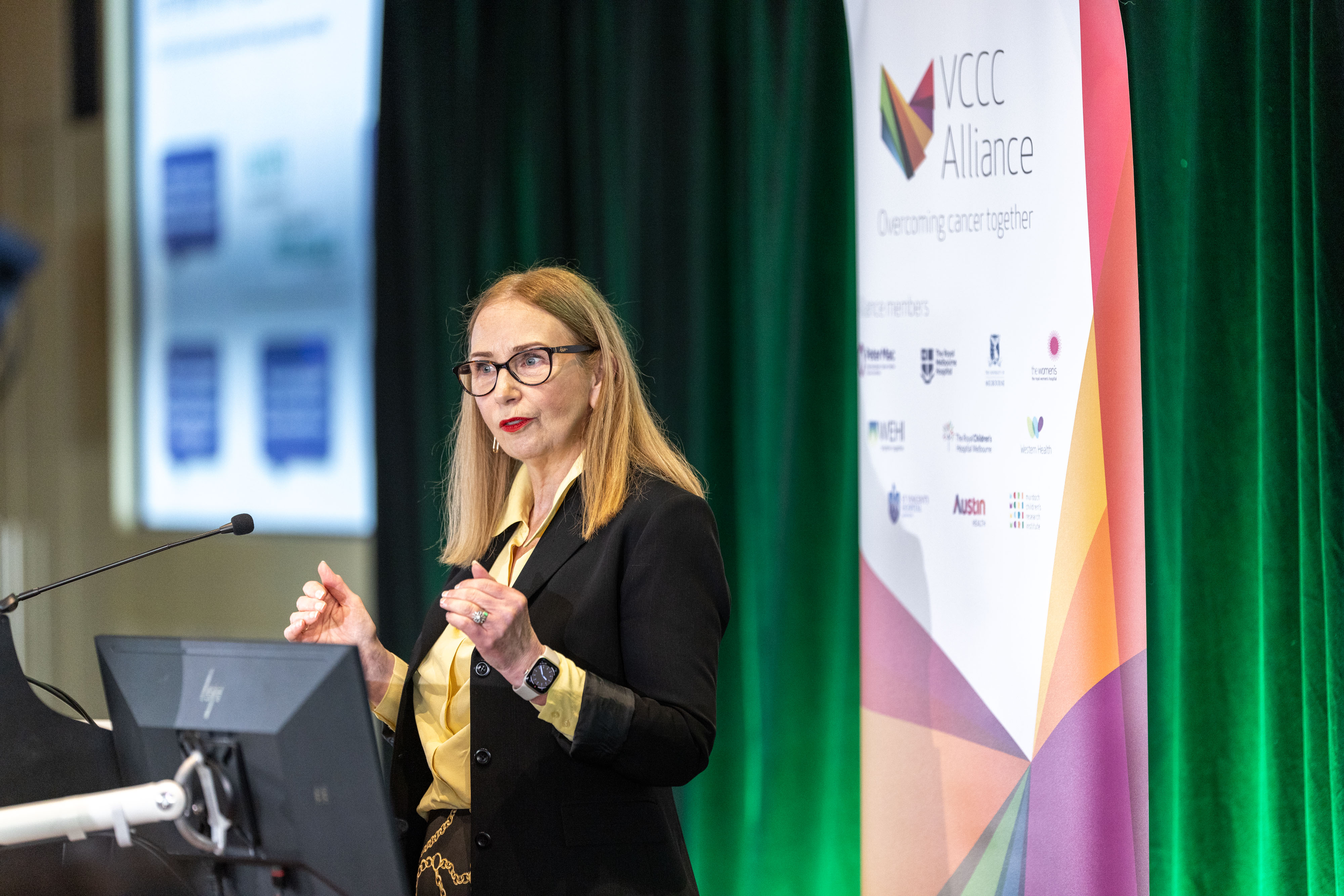
“It’s a think tank and a symposium all in one to help Victoria cope with the new challenges,” said A/Prof Wright, Lung Cancer and Lung Cancer Screening Lead at VCCC Alliance.
“We're hoping a bit of forward planning, including events like this symposium, will alert health jurisdictions to the fact this is coming,” he said.
"The National Lung Cancer Screening Program is a hugely beneficial initiative that will save lives. But we need to plan for more people needing our support. It won’t be a tsunami but it could be a wave, or a king tide. But you can't wait until it hits, that’s why we start planning now to prepare for extra work when it arrives,” said A/Prof Wright, who is also Director of Surgical Oncology at St Vincent’s Hospital Melbourne.
The Australian Government in May 2023 announced a $260 million investment in a new National Lung Cancer Screening Program to begin in July 2025. At the time, A/Prof Wright said the program would reduce lung cancer deaths by 25 per cent.
Lung cancer is the leading cause of cancer death for both men and women in Australia, with the number of new cases diagnosed continuing to increase year by year. Aboriginal and Torres Strait Islander communities carry a much higher burden when it comes to smoking and cancer rates and are three times as likely to develop and die from lung cancer than non-Indigenous Australians, according to Cancer Council Victoria data.
A/Prof Wright is keen to emphasise the program will not be publicly advertised until July 1 and that events at this time are to prepare the healthcare workforce.
He says a key factor the program needs to get right is the balance between screening targeted individuals, detecting asymptomatic cancers, and doing no harm to those who don’t require interventions like biopsies – which can be particularly invasive when it comes to lung cancer, more costly to the healthcare sector, and carry additional financial, personal and emotional burdens for those affected.
“We don't want unnecessary costs, and harms to patients. At the moment we're very reactive. We find cancers by chance and then we react, whereas this program is actively looking for cancers but trying to make sure we avoid medical interventions for people who don't actually have cancer.
“Ten per cent of patients may have something in their lung, maybe only one in 10 of those will be actually cancer. So we’ve got very tight protocols, and these will be discussed at the meeting.”
The symposium includes a session featuring radiologists to discuss these criteria.
People with a lived experience of cancer are included as speakers, which is considered the gold standard when discussing and making decisions around medical research and care. Inclusion of healthcare consumers, also referred to as patient advocates, is championed by the VCCC Alliance not only through event participation but embedded as a practice across the whole organisation.
The experience of Aboriginal and Torres Strait Islander peoples – a key target group for the screening program – will also feature. The National Aboriginal Community Controlled Health Organisation are jointly leading the program development with the Department of Health and Aged Care and Cancer Australia. Implementation partners Lung Foundation Australia and Heart of Australia are also significantly involved.
The Victorian Aboriginal Community Controlled Health Organisation (VACCHO) is partnering with the VCCC Alliance and has funding from the Victorian Department of Health to implement recruitment and follow-up strategies at urban and regional Aboriginal Controlled-Community Organisations (ACCOs).
A/Prof Kalinda Griffiths, VCCC Alliance Aboriginal Health Lead, and Director of Poche SA + NT, Flinders University will discuss building person-centred, culturally safe care for First Nations people, and the importance of data collection.
Also discussing culturally safe care are A/Prof Lisa Whop, Senior Research Fellow, ANU National Centre for Epidemiology and Population Health, and the National Lead for Aboriginal and Torres Straits Islander cervical cancer screening. Consumer advocate Deb Buck, and VACCHO Executive Manager Clare O’Reilly and Strategic Projects Manager, Shannon Gleeson round out this session.
A highlight will be Ewan Wylie, from Heart of Australia – an initiative with $45 million in Federal Funding to expand its fleet of trucks nationally to deliver the government’s national screening program to rural and remote communities. The organisation’s trucks have delivered respiratory health checks and radiology services throughout Queensland since 2022. The new trucks feature the world’s first battery-powered mobile CT scanner with the ability to provide comprehensive diagnostics in any location.
A/Prof Wright said it is important that as many eligible people as possible are screened through the new program. If 50 per cent of those eligible are screened, the workload will significantly increase, whereas if the figure is 20 per cent in the first year the system will likely absorb these, and the increased demand on healthcare services will be more gradual.
However, he said detecting cancer earlier will be better in the long-term for the system and individuals who can be cured without expensive treatment – a big cost saving to the healthcare system.
VCCC Alliance CEO Prof Grant McArthur said: “The VCCC Alliance Lung Cancer Screening Symposium would not be possible without the programs put in place by the Alliance with support from the Victorian government.
“Initiatives such as the Clinical Translational Network have enabled cancer experts from across the 11 Alliance member organisations and beyond to come together and plan educational events like these.
“The Clinical Translational Network includes Research and Education Leads – multidisciplinary experts – from leading clinical, research and academic cancer control organisations. A/Prof Gavin Wright, along with Prof Jon Emery and A/Prof Kalinda Griffiths (SA/NT), who are also involved in this event, are part of this network established by the Alliance with funding from the Victorian government.
“The Centre for Cancer Education is the education hub at the heart of the Alliance enabling this event to happen. Our dedicated and experienced educators work with subject matter experts to methodically plan timely, relevant and engaging events.
“Further funding is essential to continue these programs.”