





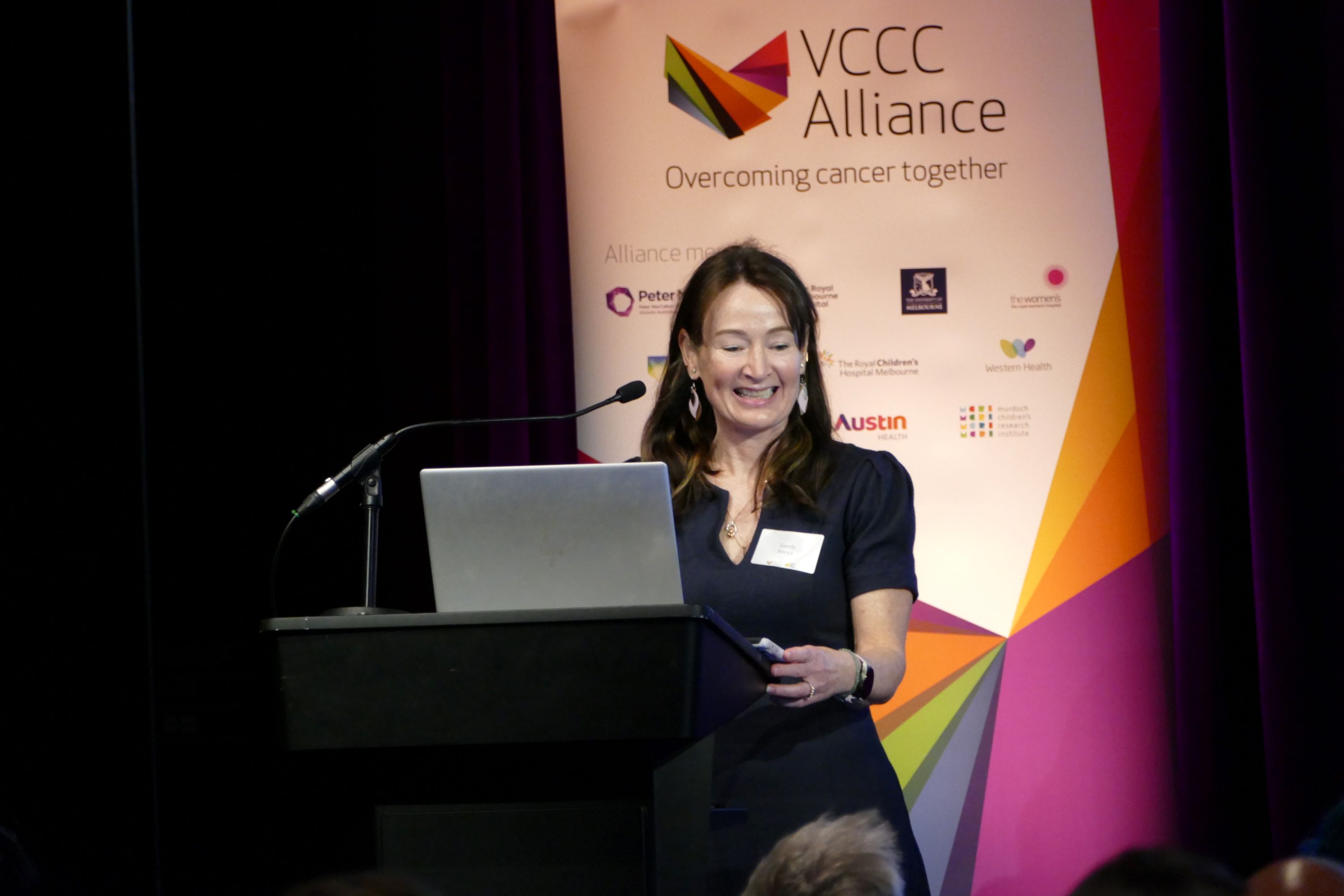
“I am a previvor.” These were the opening words from Dr Sandy Minck at the second PREDICT Symposium, as she bravely spoke of her lived experience navigating and surviving an increased risk of breast cancer.
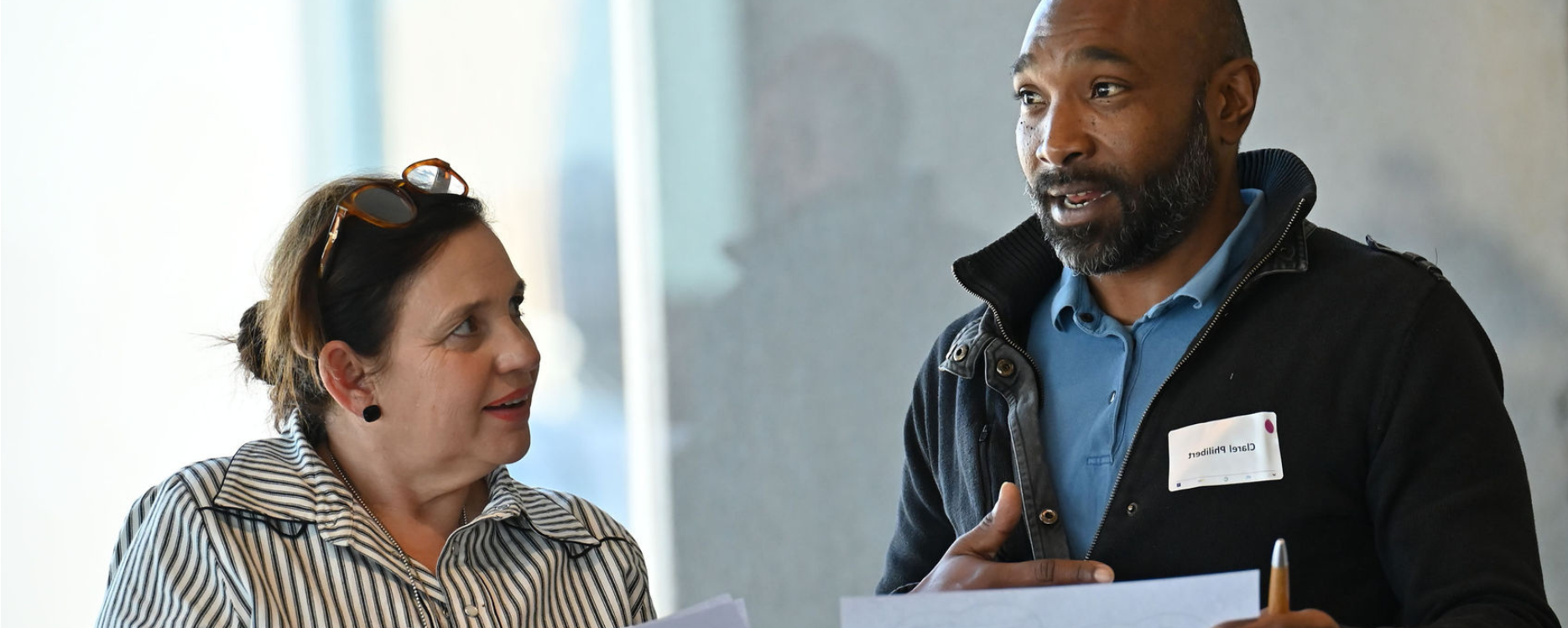
PREDICT – the Prevention and Early Detection of Cancer Network – brought together more than 120 attendees from the cancer care sector including researchers, clinicians, those with lived experience, educators and supporters at the Science Gallery on 7 October. It was the second symposium, spearheaded by Peter MacCallum Cancer Centre researcher A/Prof Kara Britt with support from Tour De Cure.
Dr Minck, a GP, and member of BreastScreen Queensland Clinical Standards and Excellence Committee at Queensland Health, said her mother had been diagnosed with breast cancer at age 57 and died aged 69.
She decided to investigate her own breast cancer risk by pursuing screening and genetic testing. An MRI ultimately resulted in the excision of a tumour in her milk glands known as a lobular carcioma in situ, while genetic testing revealed that she carried the CHEK2 gene, a genetic mutation that increases the risk for some types of cancers. In this case, the genetic risk factor was inherited from her father. From three options provided to her to reduce her risk of developing further breast cancer, Dr Minck chose to have a double mastectomy.
“I felt like I had ticking time bombs on my chest,” Dr Minck said.
She urged those in the cancer sector to not just engage but truly partner with those with lived experience at every stage, to consider the mantra ‘nothing about us without us’ and the notion to add ‘life to years, not just years to life’.
“Finally let’s see if we can shift the amazing work in early detection towards prevention. Let’s make stories like mine be the standard, not the exception.”
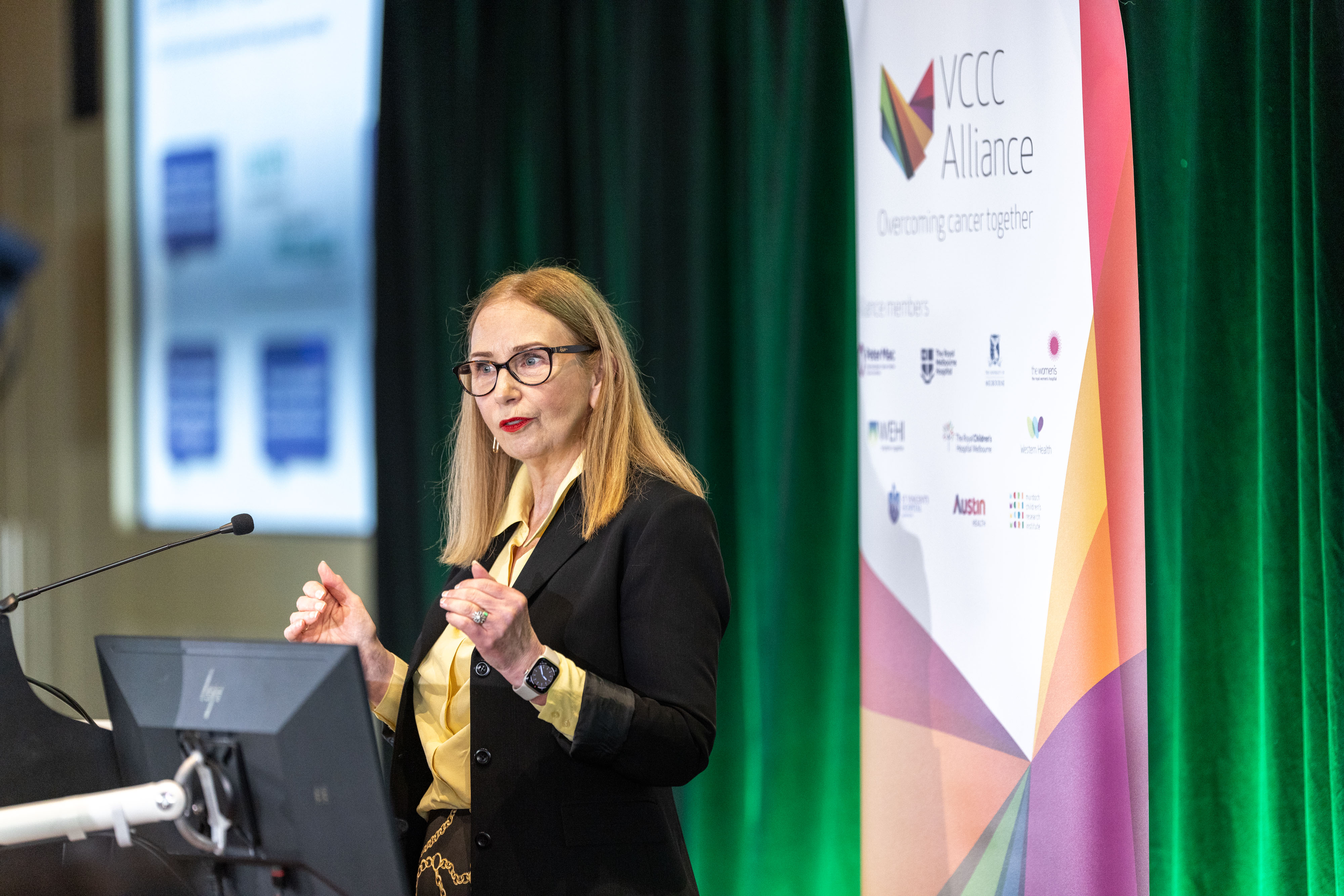
VCCC Alliance Prof Grant McArthur AO highlighted the importance of the focus on prevention and detection, while A/Prof Kara Britt and Prof Paul James discussed global perspectives – in particular, Cancer Research UK’s Early Detection and Diagnosis of Cancer Roadmap.
A/Prof Davis McCarthy drew gasps from the audience with his presentation on improving breast cancer risk prediction with AI – which he will revisit for an upcoming Monday Lunch Live on 20 October.
Eleanor Williams, Managing Director, Australian Centre for Evaluation provided insights into what would resonate for policymakers in the drive for change to focus on prevention and early detection in cancer.
The packed symposium program also featured the role of primary care and data; focusing on priority populations to ensure equity; implementation science and scaling innovations.
PREDICT is supported by a Tour De Cure grant and the symposium was sponsored by the Ovarian Cancer Research Foundation and Peter MacCallum Cancer Centre.